
Ecommerce Website Builder vs Custom Website Development: Which Is Better in 2026?
Published By
Siyahfy| on
2026-06-20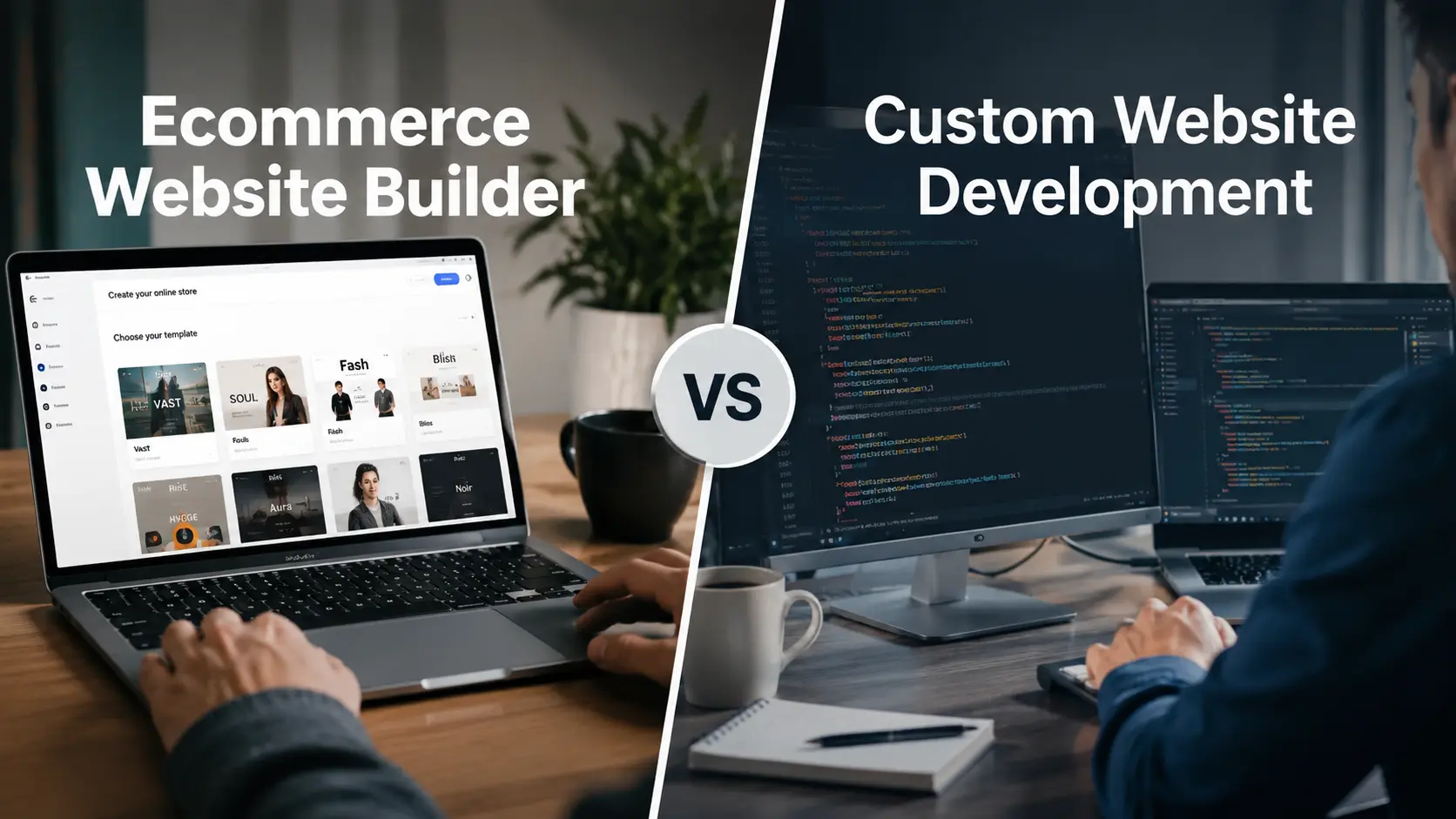
- What Is an Ecommerce Website Builder?
- What Is Custom Website Development?
- Ecommerce Website Builder vs Custom Development: Quick Comparison
- Cost Comparison
- Ecommerce Website Builder
- Custom Development
- Time To Market
- Ecommerce Website Builder
- Custom Development
- SEO Performance Comparison
- Real Example
- Brand A
- Brand B
- When an Ecommerce Website Builder Is the Better Choice
- When Custom Website Development Makes Sense
- Hidden Costs Most Businesses Ignore
- Developer Retainers
- Security Maintenance
- Hosting Infrastructure
- Feature Upgrades
- 2026 Ecommerce Trends
- Conclusion
Launching an online store has never been easier. Today, businesses can either use an ecommerce website builder or invest in custom website development.
But which option makes more sense in 2026?
The answer depends on your goals, budget, timeline, and growth plans.
Many business owners assume that a custom-built website is always better. In reality, modern ecommerce website builders now offer advanced features, flexibility, and scalability that were once available only through custom development.
This guide compares both options in detail so you can make the right decision for your business.
What Is an Ecommerce Website Builder?
An ecommerce website builder is a platform that allows businesses to create, manage, and grow an online store without writing code.
Popular examples include:
- Shopify
- Wix Ecommerce
- BigCommerce
- Squarespace Commerce
- Siyahfy
These platforms provide:
- Website design tools
- Product management
- Payment gateway integration
- Inventory management
- Order tracking
- Analytics dashboards
- Marketing tools
Instead of building everything from scratch, businesses can launch quickly using ready-made infrastructure.
What Is Custom Website Development?
Custom website development involves building an ecommerce store from the ground up using programming languages and frameworks.
Common technologies include:
- React
- Next.js
- Laravel
- Node.js
- Magento
- WooCommerce Custom Builds
With custom development, every feature, design element, and functionality is created specifically for the business.
This approach offers complete flexibility but requires significantly more time, budget, and technical expertise.
Ecommerce Website Builder vs Custom Development: Quick Comparison
| Factor | Ecommerce Website Builder | Custom Website Development |
| Setup Time | Days | Months |
| Initial Cost | Low | High |
| Maintenance | Included | Ongoing Cost |
| Security | Managed | Self Managed |
| Updates | Automatic | Manual |
| Scalability | High | Depends on Development |
| Technical Skills | Minimal | Required |
| Custom Features | Limited to Platform | Unlimited |
| Speed to Launch | Fast | Slow |
| Ownership & Flexibility | Platform Dependent | Complete Control |
Cost Comparison
One of the biggest deciding factors is cost.
Ecommerce Website Builder
Typical expenses include:
- Monthly subscription
- Domain
- Optional premium themes
- Apps and integrations
Average annual cost:
₹10,000 to ₹1,00,000+
Custom Development
Typical expenses include:
- UI/UX design
- Frontend development
- Backend development
- Testing
- Hosting
- Security
- Maintenance
Average investment:
₹1,50,000 to ₹20,00,000+
For startups and small businesses, the cost difference is substantial.
Time To Market
In ecommerce, speed matters.
A delayed launch can mean lost revenue opportunities.
Ecommerce Website Builder
Most stores can be launched within:
- 1 day
- 1 week
- 30 days maximum
Custom Development
Development timelines often range from:
- 2 months
- 6 months
- 12 months
Businesses that want to start selling quickly usually choose an ecommerce platform.
SEO Performance Comparison
Many people believe custom websites automatically rank better.
This is no longer true.
Modern ecommerce platforms now provide:
- SEO-friendly URLs
- Meta tags
- Schema markup
- Mobile optimization
- XML sitemaps
- Fast loading speeds
Google prioritizes:
- Content quality
- User experience
- Site speed
- Relevance
- Authority
Not whether a website was custom coded.
A well-optimized ecommerce builder can outperform poorly developed custom websites.
Real Example
Imagine two fashion brands.
Brand A
Builds a custom website.
- Development cost: ₹8 lakh
- Launch time: 5 months
Brand B
Uses an ecommerce website builder.
- Setup cost: ₹25,000
- Launch time: 7 days
Brand B starts generating sales immediately while Brand A is still waiting for development to finish.
In many cases, speed to market creates a bigger competitive advantage than custom functionality.
When an Ecommerce Website Builder Is the Better Choice
Choose an ecommerce builder if you:
- Are launching a new business
- Want faster setup
- Have a limited budget
- Need built-in analytics
- Want easy store management
- Prefer no-code solutions
- Want automatic updates and security
This option works best for:
- D2C brands
- Clothing stores
- Beauty brands
- Home decor businesses
- Small and medium enterprises
- Creators and personal brands
When Custom Website Development Makes Sense
Custom development may be better if you:
- Require highly specialized workflows
- Need unique business logic
- Have enterprise-level operations
- Require advanced integrations
- Need complete control over every feature
Common examples include:
- Large marketplaces
- Multi-vendor platforms
- Custom B2B portals
- Enterprise ecommerce systems
Hidden Costs Most Businesses Ignore
Before choosing custom development, consider these ongoing costs:
Developer Retainers
Bug fixes and updates require developers.
Security Maintenance
Regular security audits become your responsibility.
Hosting Infrastructure
Traffic spikes can increase server costs.
Feature Upgrades
Every new feature requires additional development.
These expenses often exceed the original project budget over time.
2026 Ecommerce Trends
Businesses are increasingly prioritizing:
- AI-powered analytics
- No-code management
- Faster store launches
- Mobile-first experiences
- Built-in marketing tools
- Integrated payment systems
As ecommerce technology matures, website builders continue closing the gap with custom development.
For most businesses, the question is no longer:
“Can a website builder handle my store?”
The question is:
“Do I really need custom development?”
Conclusion
For most startups, creators, and growing brands in 2026, an ecommerce website builder offers the best balance of cost, speed, scalability, and ease of use.
Custom website development remains valuable for highly specialized business models, but it often introduces higher costs, longer timelines, and ongoing maintenance challenges.
If your goal is to launch faster, sell sooner, and focus on growing your business rather than managing technology, an ecommerce website builder is usually the smarter choice.


